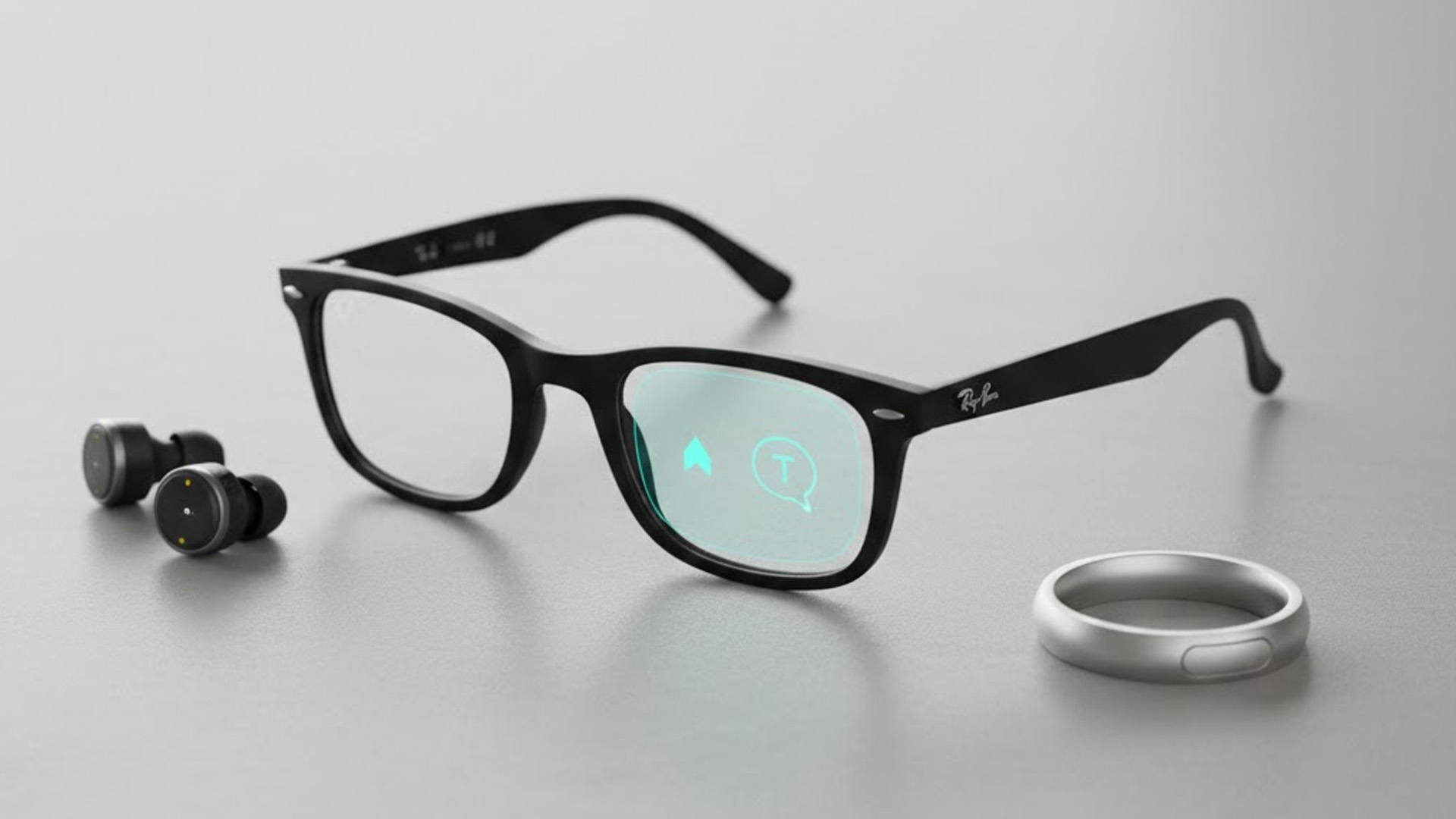
In 2025, your next “screen” may not be a phone at all. It might sit on your nose or wrap quietly around your finger.
Meta’s Ray-Ban smart glasses are finally launching in India. Even Realities has dropped the Even G2 display glasses plus the R1 smart ring. At the same time, Samsung, Apple and others are lining up AR glasses and AI gadgets that promise translation, navigation, coaching and even a kind of “emotional” companion. Meta+1
So the big question for buyers, creators and affiliate reviewers is simple:
Are AI wearables 2025 finally going mainstream, or are they still a hype cycle with extra steps?
Let us break it down.
Why AI wearables are having a moment in 2025
The numbers say wearables are no longer a niche.
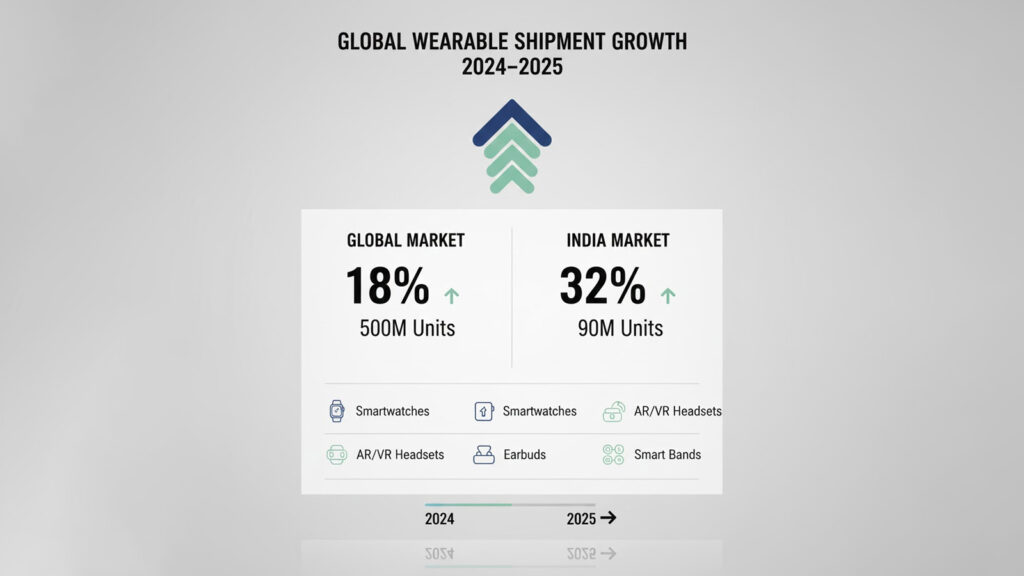
- The global wearables market shipped about 136.5 million devices in Q2 2025, up nearly ten percent year on year. IDC
- In India, total wearables shipments actually dipped in 2025, but the average selling price went up, which signals a shift toward pricier “smart” devices instead of ultra cheap bands. IDC
At the same time, fashion and tech are finally working together. Vogue Business calls smart glasses “prime real estate on the body” because they live on your face, close to your eyes and ears, and can blend into everyday style instead of feeling like a gadget. Vogue
Layer in better on-device AI, lighter batteries and new display tech, and you get a second wave of AI smart glasses and companion devices that actually look like things people might wear to work or brunch.
Meta Ray-Ban: camera first, then true AR
Meta has been iterating on Ray-Ban glasses since the early “Stories” models. The 2025 generation is where things get serious.
What the Meta Ray-Ban glasses do today
In India, Ray-Ban Meta glasses are rolling out through Amazon, Flipkart and Ray-Ban’s own site, with prices around ₹29,900 to ₹35,700 depending on Skyler or Wayfarer frames. Ray-Ban Official Store India+1
The current models offer:
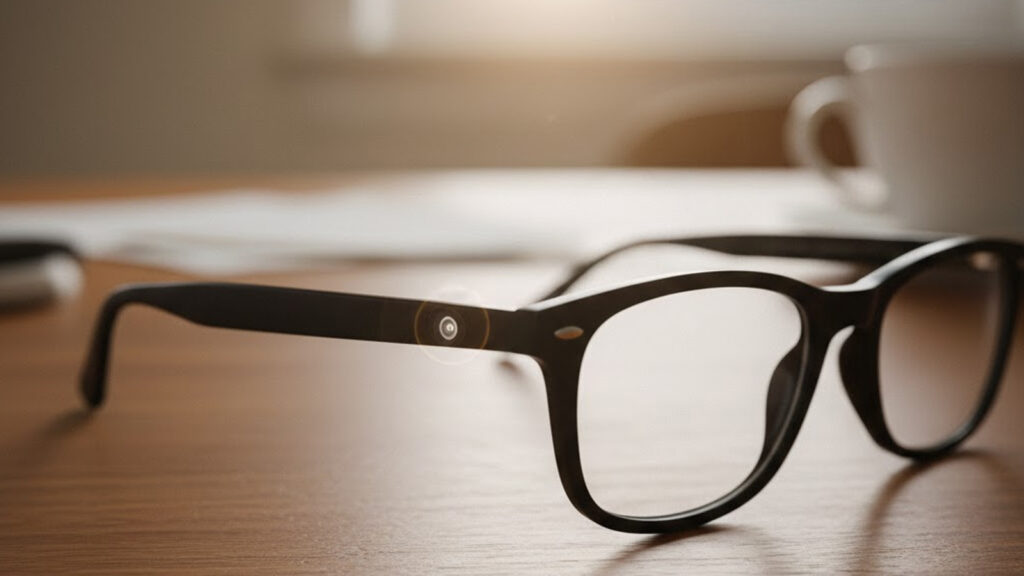
- First person photos and video capture with a discreet camera
- Open ear speakers and microphones for calls and music
- Hands free Meta AI assistant with support for Hindi and celebrity voices in India The Times of India
- Voice controls for posting, messaging and simple queries
They are not full AR glasses yet. There is no always on text overlay in your field of view. Instead they behave more like social, audio and assistant glasses that keep your hands free.
What is coming in 2025 and beyond
Meta has already teased Ray-Ban Display glasses with in lens micro displays plus a neural wristband that reads tiny electrical signals from your muscles to control the interface. Meta
That next step should unlock:
- Subtle heads up notifications
- Visual navigation arrows
- Live captions and AI translation glasses features
- Real time object recognition and “what am I seeing” prompts
If Meta pulls this off at Ray-Ban style and price points, it is a huge push toward mainstream AR glasses.
Even G2 glasses and R1 smart ring: privacy first AI on your face and hand
On the other side you have Even Realities, a European startup that takes a very different view of AI wearables.
Even G2: no camera, lots of AI
The Even G2 glasses look like regular prescription frames, but inside they hide:
- A micro LED based “floating” monochrome display layered into the lenses
- Four microphones for voice input
- No outward camera and no external speakers by design, to reduce surveillance concerns The Verge+1
- IP67 water resistance, around 36 grams of weight and more than two days of battery life with a charging case that adds multiple refills Android Central+1
On the software side they integrate several AI models including ChatGPT, Perplexity and Even’s own LLM. That powers features like:
- Translate for live translation in around 29 languages
- Navigate for subtle turn by turn prompts
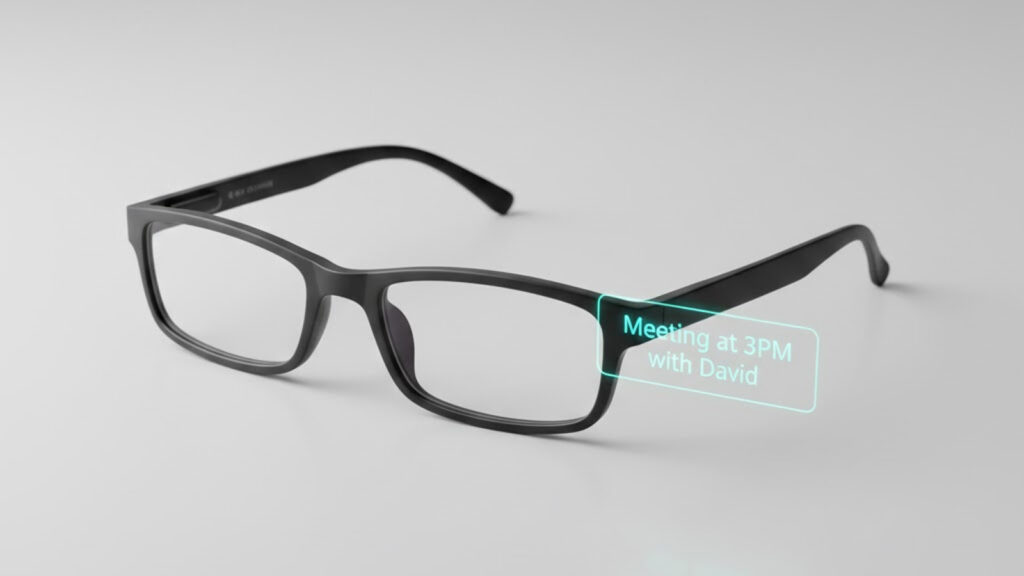
- Teleprompt so your notes float near your natural focus point while you speak
- Conversate, which listens to a discussion and offers explanations, summaries or nudges, almost like an “empathy” companion coach in your peripheral vision The Verge+1
Pricing starts near 599 dollars for the glasses, firmly in premium territory. WIRED+1
Early reviews praise the sharp display and thoughtful design, but mention some software bugs and growing pains, which is common for first and second generation AI wearables. Gizmodo
R1 smart ring: remote control plus health tracker
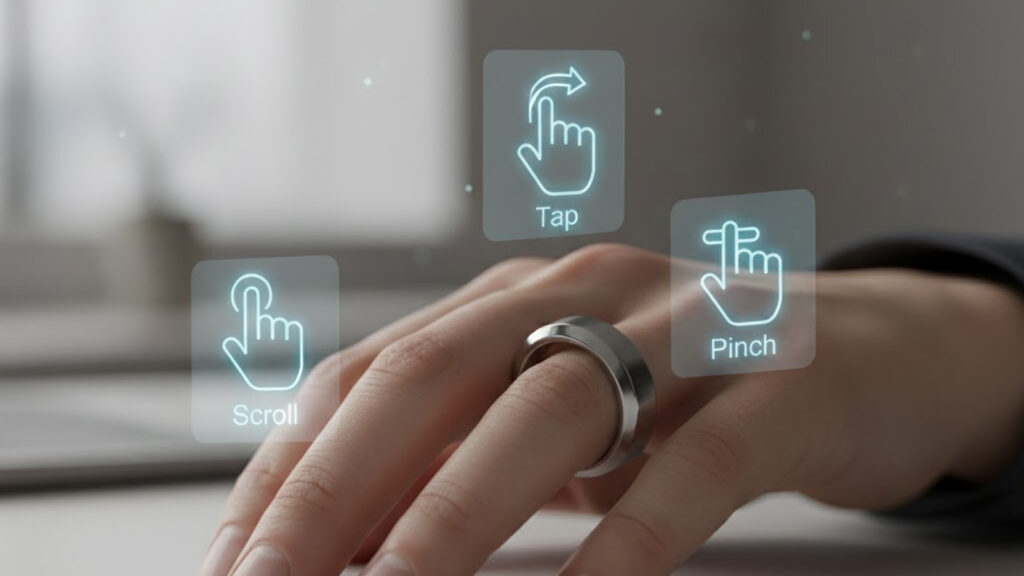
The R1 smart ring completes Even’s ecosystem. It is built from zirconia ceramic and stainless steel, and it:
- Works as a gesture controller for the G2 glasses through taps and scrolls
- Connects to your phone for notifications and controls
- Tracks heart rate, heart rate variability, blood oxygen level, skin temperature and activity, and also monitors sleep quality at night evenrealities.com+1
At 249 dollars, the R1 smart ring sits in the same price band as Oura or Ultrahuman rings, but with that extra role as an input device for your glasses. WIRED+1
Together, the G2 glasses and R1 ring form a smart home and wearable ecosystem on your face and hand that aims to be helpful while staying visually quiet.
What AI smart glasses are actually good for in 2025
So what does any of this mean in daily life? Here are the use cases that already feel real, rather than sci-fi.
1. Hands free video and social capture
For creators, parents or travellers, Meta Ray-Ban glasses are essentially a body cam that looks like fashion. You can:
- Capture point of view clips while biking, cooking or unboxing
- Stream to social platforms without holding a phone
- Record candid moments that feel more natural than when you wave a camera around
This is the most mature use case today and the easiest to explain to non tech friends.
2. Live translation and “AI in your ear”
Both Meta and Even are leaning hard into translation.
- Meta’s assistant can already understand multiple languages, with localised support like Hindi in India. The Times of India
- Even G2’s Translate feature promises in display subtitles and prompts in dozens of languages. evenrealities.com+1
If you travel across the Middle East, Europe, or between India and Pakistan, AI translation glasses can act as a persistent tour guide and interpreter.
3. Navigation that does not own your attention
Instead of staring at a phone while crossing a busy street in Karachi, Dubai or Mumbai, AR style glasses can give you:
- Subtle arrows at the edge of your view
- Haptic or audio cues from your glasses or smart ring
- Contextual prompts like “your bus stop is next”
This is where AR glasses start to feel safer than phones, not more distracting.
4. Teleprompter, meetings and “empathy” co pilots
Even’s Teleprompt and Conversate tools are built exactly for this. Imagine:
- Talking to a client while your notes float just above their head
- Getting a quick AI explanation of an acronym the moment it appears in conversation
- Seeing suggested follow up questions for a sales call or interview
For anxious speakers or neurodivergent users, this kind of real time cognitive support can feel like a superpower, though it also raises questions about authenticity and consent.
5. Health tracking and smart home control
The R1 smart ring tracks your health metrics similar to other wellness rings and can eventually act as a remote for other devices. evenrealities.com+1
In a future where your ring talks to your glasses, watch and lights at home, the AI wearables 2025 stack becomes a kind of personal operating system that follows you from room to room.

The difficult bits: privacy, data and UX
None of this is free of tradeoffs. Before adding AI gadgets to your face and fingers, it is worth thinking through a few issues.
Cameras in public
Ray-Ban glasses have visible but still fairly discreet cameras. That makes bystanders nervous, especially in countries that already worry about constant surveillance. Editorial reviews have long pointed out the tension between “awesome first person clips” and the feeling of being recorded without consent. Gizmodo+1
Some cafes and coworking spaces may eventually set their own policies, just as some banned Google Glass in the early 2010s.
Even’s solution is to ship G2 with no camera at all, then lean on microphones and AI inference instead. The Verge+1
Data collection and AI models
Both ecosystems rely heavily on cloud based AI. That means:
- Your audio and usage data may be stored, even if anonymised
- Transcripts of your conversations can end up on company servers to improve models
- Health data from a smart ring is extremely sensitive if ever misused
Serious buyers should read privacy policies, check local data protection laws and decide which companies they actually trust with a live feed from their daily life.
UX friction and bugs
We are still in the early generations. Reviews of Even G2 praise the concept but mention that the software can feel buggy and that features like Conversate are hit and miss in noisy environments. Tom’s Guide+1
For Meta Ray-Ban, the limitation is slightly different. The hardware is slick and the AI is impressive, but without a display everything still routes back to your phone screen at some point. That leaves room for frustration when you want richer AR experiences.
It is worth treating all of these as enthusiast products rather than appliances that “just work” like a fridge.
Regional angle: India, Pakistan and the Middle East
India smart wearables market
India has become a volume monster for affordable wearables. Shipments of low cost smartwatches and bands are massive, though the market cooled a little in 2025 as cheaper segments matured. IDC+1
Premium devices are growing faster:
- Apple Watch shipments in India jumped more than one hundred percent in 2024 even as the overall smartwatch market shrank. TechCrunch
- Meta’s Ray-Ban launch through Amazon India and major e commerce partners shows that brands now see a real audience for premium AI smart glasses priced around thirty thousand rupees. The Times of India+2Ray-Ban Official Store India+2
For affiliate publishers in India, these launches open up a new “tech gifts 2025” category for creators, travellers and startup founders who want something more exciting than another smartwatch.
Pakistan and the Middle East
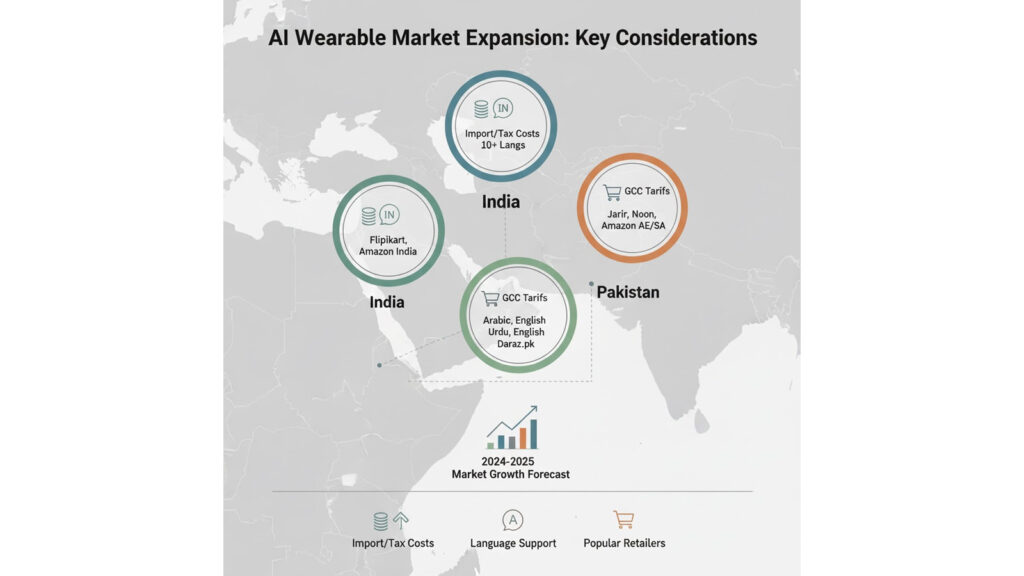
In Pakistan and many Middle Eastern markets, imports and taxes can make AI glasses very expensive, but there is also a large young, tech forward population.
Practical angles for local guides include:
- Cross border shopping tips for travellers to Dubai or Doha where Ray-Ban Meta or future Samsung and Apple AR glasses might be easier to find
- Language support for Urdu, Arabic and regional dialects, and how well Meta AI or third party apps handle them
- Whether a smart ring like the R1 or Oura is a better first step into AI wearables than full glasses
For now, these devices will mostly be early adopter status symbols, but that is exactly how smartphones started.
Should you buy AI wearables in 2025?
Here is a quick decision map for different types of users.
Meta Ray-Ban is for you if:
- You create content and want natural, hands free video
- You like the idea of a voice first assistant that feels more subtle than yelling at your phone
- You live in a city where walking around with camera glasses does not feel socially risky
Skip them for now if privacy is a constant worry, or if you mainly want AR overlays rather than capture.
Even G2 glasses and R1 smart ring are for you if:
- You wear glasses every day and want a tech upgrade that still looks like normal eyewear
- You care more about translation, navigation and productivity than about social posting
- You prefer camera free glasses that lean into privacy and “empathy” style AI prompts
Skip or wait if you dislike being a beta tester or do not want to spend eight hundred dollars or more on a first ecosystem.
Smart ring alone?
If you want to dip a toe into the AI wearables 2025 world, a smart ring is the least intrusive starting point. A ring like the R1 gives you wellness tracking and some control features, and it works even if you are not ready to wear AR glasses to the office yet. evenrealities.com+1
Quick FAQs
Are AI wearables finally mainstream in 2025?
They are not fully mainstream yet, but they have moved from concept to early mass market. Shipments are growing and big brands are investing, yet prices and UX quirks still keep them in the early adopter zone. IDC+1
Which is better: Meta Ray-Ban or Even G2 glasses?
Meta Ray-Ban is better today for social capture and casual assistant use, especially if you live inside Meta apps. Even G2 is better if you want serious productivity, translation and privacy focused AR style overlays, and you are willing to live with some software rough edges and a higher price. Gizmodo+3evenrealities.com+3The Verge+3
Can I use these glasses in India, Pakistan or the Middle East?
Ray-Ban Meta is officially launching in India with localised Hindi support. In Pakistan and some Middle Eastern markets you may need to import them and check network or app availability on local app stores. Even Realities currently sells online direct and ships to selected regions, so buyers should confirm shipping options and support. Ray-Ban Official Store India+2Gadgets 360+2
Are AI wearables safe for privacy?
They can be, but it depends on your threat model. Camera free AR glasses and transparent privacy policies help, yet any always on microphone or health tracker will collect very sensitive data. Think carefully about where data is stored, how long it is kept and how easy it is to delete. The Verge+2evenrealities.com+2
Conclusion: 2025 is the dress rehearsal for AI on your face
In 2025, AI wearables 2.0 feel less like sci-fi prototypes and more like the awkward but exciting teenage years of a new computing platform.
Meta Ray-Ban is turning camera glasses into a fashion object with real scale in markets like India. Even G2 and the R1 smart ring show what a privacy first, display heavy future could look like, even if the software still stumbles.
If you love being early and you understand the tradeoffs, smart glasses and rings can already deliver real utility. If you prefer polished, phone-level reliability, you might treat 2025 as your research year and plan a purchase when the next generation drops.
Either way, the battle for your face and your fingers has started, and it will shape how we see and record the world for the next decade.